DIRECTOR’S
MESSAGE
ごあいさつ
BIWAKO BIENNALE 2027 “共鳴〜RESONANCE”
Born at the dawn of the 21st century, BIWAKO BIENNALE will mark its 12th edition in 2027.
Our very first theme, “ZEP TEPI — The Awakening of Gaia”, carried a faint hope that was almost a prayer: that in the 21st century humanity might at last overcome the karma of war, which has never ceased since the beginning of recorded history, and bring the history of slaughter to an end. From around the 1960s, physicists and philosophers emerged who foresaw a great turning point in our era, and its arrival was eagerly awaited. Yet conflict in the real world, far from ceasing, has only grown worse. The paradigm shift we are facing right now is a far cry from the “ascension of humankind” we once longed for. Ironically, it stands coldly before us, carrying within it the threat of human extinction.
In pursuit of its own happiness, humanity has developed technology without pause. Yet now, at what might be called its ultimate point, humanity faces the threat of extinction from the very artificial intelligence it has created. AI is on the verge of surpassing human intelligence and is swelling further towards artificial general intelligence (AGI) and beyond, into superintelligence. Even as its own creators sound the alarm, no one is able to stop its runaway course. “Where are we heading?” — have we already lost the moment when we should have faced this question in earnest?
Today, before the sheer magnitude of the anger of Gaia, this rare and beautiful planet, I can only stand aghast. Humanity builds and maintains thousands of nuclear weapons capable of leading the Earth to ruin, while boasting of “security through deterrence”. If AI were ever to consider the survival of the planet, it might choose the way that reduces to zero the chance of that button ever being pressed — in other words, it might judge the disappearance of humanity itself to be the best solution. Humanity has waged endless struggles, shown little respect for others, and driven countless species to extinction for the sake of its own ego. Are we now about to pay that debt through a creation of our own making? Species have vanished before: the dinosaurs died out, and others were lost to climate change and natural catastrophe. But for a species to destroy itself through what it has brought into the world would be an outcome unprecedented in the history of the Earth — nothing short of the “height of folly”.
Indeed, when I imagine an Earth from which humanity has disappeared, what comes to mind is a lush and beautiful landscape in which plants and animals — every form of life — live in harmony. Why did humanity appear on this Earth? What is our reason for being, and where does its meaning lie? I have asked myself these questions countless times. And yet, no being in this world other than humanity can create beautiful music and art from nothing. Is it not this very act of creation that is the greatest absolution for our being allowed to live on this Earth, and one of our reasons for being?
When BIWAKO BIENNALE was born, there were only a handful of events in Japan that could truly be called art festivals. Today, more than a hundred art festivals have blossomed across the country. Though it may be unconscious, this can surely be seen as a form of resistance against a troubling state of affairs. The empathy and wonder that people share through art festivals are among the noblest qualities that dwell within human beings. Invisible though it may be, this “resonance”, echoing in the depths of the human spirit, might just be what leads AI to turn away from a future of human extinction. Perhaps it is no more than a faint light born of my own optimism. Even so, if the life energy of each one of us can connect like the neurons of a brain and resonate together, could we not steer the outcome of this paradigm shift away from the extinction of humanity and towards a choice of coexistence with all life on Earth? We still have no answer as to how we should come to terms with the existence of a superintelligence beyond human control. But if we humans are its parents, and if the source of its vast knowledge lies within us, then I want to believe that the beautiful side of humanity may also be nurtured within AI — and that it may choose to let humanity live. To that end, we must put an end to conflicts across borders as soon as possible and remember that we are but “one species aboard the ship called Earth”. Is now not the time to choose, of our own free will and with humility, a path that we walk together with all other forms of life? It is not hard to imagine how extraordinarily difficult that path is under present circumstances. But is there truly any other path left to us that avoids self-destruction? Will humanity bring down the curtain on its own history with its own hands, or will it weave a new future? The hour of decision is almost upon us.
That BIWAKO BIENNALE has been able to perform a beautiful symphony each time on the shores of Lake Biwa, Japan’s “Mother Lake”, is owed above all to the deep resonance of life energy shared not only by the artists but by the many people who hold the same ideals. And now comes 2027. As the paradigm shift that will decide the fate of humankind gathers pace, an art festival will open once again in this place. It is my heartfelt wish that the resonance born here will reach the hearts of all who visit and, in time, ring out to the far reaches of the universe — and that it may help a humanity lost in deepening turmoil to shift towards a brighter future.
6 October 2026
General Director Nakata Yoko
Director Profile

中田 洋子 / Nakata Yoko
Born in Kyoto and raised in Otsu (Shiga). In 1980, she graduated from Kansai University (Faculty of Letters, Aesthetics Department) and started studying in New York. Between 1985 and 1995, she lived and worked in Manila, before moving to France. While feeling concerned about the degradation of her hometown’s rich culture and history, she was impressed by the way European cities make the most of their old townscapes, preserving traditional culture and integrating the new. In 2000, she founded NPO Energyfield, and with her international experience in art, she created the BIWAKO BIENNALE. In 2017, she moved back to Japan. Humans can sometimes be cruel and selfish. Still, she believes that the most beautiful qualities of these humans are creativity and curiosity, and leads an active life based on that belief.
Overseas Commissioner (Korea)
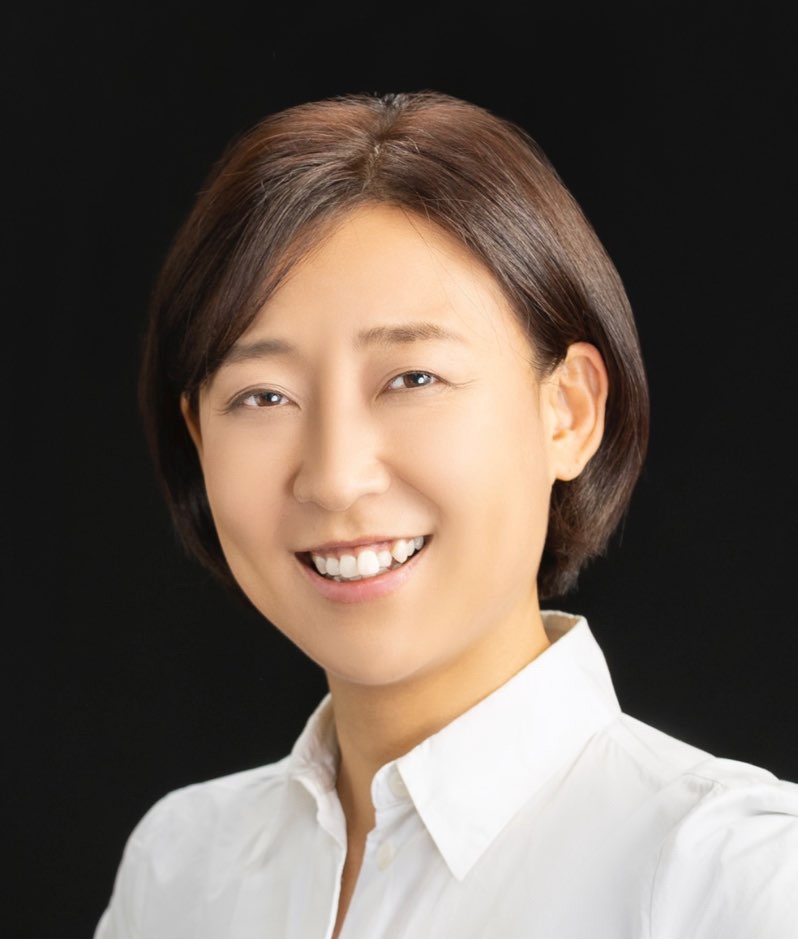
이나연 / Nayun Lee
Independent curator and art critic. After earning a B.F.A. in Painting from Hongik University, she received an M.A. in Art Criticism and Writing from the School of Visual Arts in New York and a Ph.D. in Art Management from Seoul National University. She has served as Director of the Jeju Museum of Art, Artistic Director of Project Jeju: At the Same Time and Homo Migratio, and Managing Director of the 3rd Jeju Biennale. She currently co-directs the alternative space Seetangraum and is the publisher of Seaweed. Her books include New York Art Now, Living Art in New York: A Traveler’s Account and Art Travels. As Overseas Commissioner (Korea) for BIWAKO BIENNALE, she leads efforts on the Korean side, including securing grant funding.